


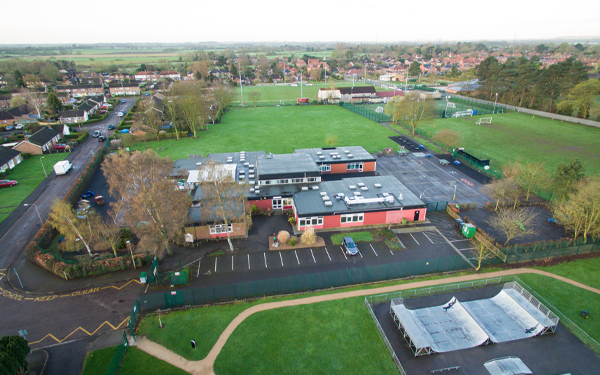
I have long appreciated that when school professionals begin their careers, the last thing on their mind is management and development of their school estate. Instead, they’re motivated to nurture young minds and help pupils achieve their full potential. They learn the building blocks to educational success, not the bricks and mortar management of the built environment.
And this isn’t necessarily a problem, all the while the Local Authority holds responsibility for the safety, maintenance and development of their school. However, once a school converts to an academy, the discipline of estate management and development falls squarely on their shoulders.
Numerous studies show how the quality of the learning environment impacts on teaching performance and pupil attainment. The two are inextricably linked. The ESFA’s recent best practice guidance for Good Estate Management for Schools (GEMS), recommends that academies revisit their school vision, carefully considering how their estate strategy contributes to their educational objectives. Post-conversion, school leaders now need to be as passionate about their school buildings as they are about learning culture, teaching quality and pupil attainment.
When deciding which school to opt for, parents will scrutinise different schools; reviewing Ofsted ratings, working out logistics, getting a feel for culture and values. During open evenings, the provision and condition of facilities will have a strong impact on their perception of the school and its suitability for their child. The impression that they come away with from their visit, may end up being a crucial deciding factor.
Over the last couple of weeks, parents and pupils will have been anxiously opening letters, to see if their application to their school of choice was accepted. Reflecting on what your school offers, will yours be at the top of their list? If not, is it your estate and facilities letting you down?
The reality is that, as an academy, you are now in competition with other schools, sometimes within your own MAT. Resources, the very best teachers, limited funding streams, inward investment and prospective pupils have to be won. To illustrate the point, look at the market that Academies operate in and the opportunities and risks to be considered:
- Small MATs and SATs can submit annual bids for condition improvement funding, allowing them to invest reserves elsewhere. However, CIF is over subscribed and bids should be detailed, targeted and form part of the estate’s development strategy.
- Larger MATs in receipt of formulaic funding, need an advance appreciation of good estate management so that budgets are aligned to future liabilities and expenditure reduced through preventative maintenance programmes.
- The academy sector is dynamic, with schools transferring, merging and adopting in an effort to keep attracting pupils and remain financially viable. Vulnerable schools may find themselves absorbed if they are unable to stand independently.
- Trusts that are actively looking to expand will need to invest in adequate due diligence to determine the extent of the liabilities within the estate.
- In the next 10 years, 700,000 additional school places need to be found. Progressive schools will be looking to build capacity in their estate to meet the demand and develop facilities to teach skills needed for the future.
- Finally, schools can look to differentiate by developing facilities that support them to specialise in areas such as sports, ICT, STEM or drama, setting them apart from others in the locality.
Whatever the school’s ambitions, those with a clear vision and strategy will be in a position to capitalise on opportunities and mitigate risks. Having a strong, research based business case founded on a knowledge of school requirements and it’s place in the wider community, will be key to securing funding and attracting inward investment.
One thing is clear, built assets are vitally important to the success of the school; enhancing educational attainment, staff and pupil retention and attracting new generations of pupils.
If you would like help revisiting or establishing your estate vision and strategy, please contact us and we can discuss your individual needs.
With a comprehensive suite of asset management services a bespoke and tailored approach to our client’s needs, we can help you make the most out your built assets.